What next?
Using heatwave trauma to make a plan

On the ninth night of the heatwave in Paris, I went wearily to bed—no covers, fan on, window closed because it was still hotter outside than in—and, as I tried to rest, I realized my heart felt tired.
I didn’t know that was possible, to feel the tiredness of your heart. I’m 44, no health problems, I exercise a lot. But after nine days and eight nights of extreme heat, of never cooling down, my body was stressed. I had done what I could before bed. A cold shower, a cold cloth on my neck, a glass of ice water. So I lay there in the heat, exhausted, feeling my heart.
At four in the morning, I woke to use the bathroom. I put a cold cloth around the back of my neck and went to check on my girls. They were burning up, like they had fevers. I soaked all of our washcloths in cool water, wrung them out, and laid them on my babies’s* heads, necks, arms and legs. I spent the next half hour changing out the cloths, pulling the heat out of my kids until they were cool to the touch. Then I gave them each an ice pack, the kind you use for an injury, wrapped in a napkin, and they held them to their chests like they were teddy bears.
It was still hot outside at 4:30 in the morning; still hotter out than in, so I didn’t open the window. The fan was full on them. It was as much as I could do. I went back to bed with my own ice pack, my own fan, wondering how many more nights. Wondering, how is Jean-Luc, our neighbor in his sixties who has a heart problem. Wondering, how is Jacques, my husband’s uncle who is in the hospital. Wondering, how are we doing this? Will we survive?
The next day was hot, but the night—the night was cool. Not cold, but cool. And there was wind for the first time in ten days. I opened all the windows in the house and stopped open the doors. The wind blew, the fans whirled, cool air rushed across the house, rushed over our bodies, still on top of the sheets, still covered with wet cloths. Finally, I thought. Finally.
The fever broke.
Now my kids and I are on California’s central coast, staying with my mom as we do every summer. It’s foggy and cool, something I swore to myself I would not complain about this year. So far so good, though things got a little dicey when my kids told me it was too cold to go to the pool. Though my family has a reprieve from the heat until August, I’m hanging onto the trauma of the June heatwave, which is not even officially over, because I know I need to plan for the future. This is not a time to be complacent.
(My husband, for those thinking he is consciously absent, has been in Mongolia for work since June first. While we were seeing 40 C in Paris, he was still in winter gear to face a cold snap of 3 C).
What next?
Home
We’re going to need a way to cool our home. The night my heart felt tired and my kids and I slept with ice packs, we were in danger. Many of my neighbors purchased portable air conditioning units during the peak of the heatwave. There are pros and cons to these units. I’d like to have something a little more energy efficient, like a heat pump, but I don’t know what the installation looks like. Since we’re in an apartment, anything that requires modifying the exterior of the building needs to be approved during the annual co-op meeting, which probably means it’s not worth pursuing. So, the next step is research.
This winter, hopefully, we can purchase whatever system makes the most sense for our situation, so that we’re better prepared for next season’s heatwaves.
We also need a better fan or two. My friend Mark recommended Taurus fans. So now you know.
School
My other focus will be on schools. During the peak of the heatwave, I wrote to our city with some suggestions and to ask if they have a plan to make schools more heat resistant. I haven’t heard back from them, but in any case I’ll try to set up a meeting with someone from city hall when we return. I’ll also ask for meetings with school administrators, teachers, and the parent representatives. To solve this issue, we’re going to need parents, teachers, administrators, and government officials to work together to propose solutions and raise the funding.
During the peak of the heatwave, I sent a photo of my daughter’s classroom to my French family group chat, saying I thought we needed air conditioning in schools. My brother-in-law, who is a construction engineer, oversees a lot of school refurbishments. He told me that it’s probably nearly impossible to finance the addition of A/C to classrooms, which I didn’t love hearing. So, I wonder if schools should take a page from the retirement community plan and create a large cooling center on each campus.
If school cantines were air conditioned, students and teachers could spend at least a half hour a day cooling off while they ate their lunch, and the rest of the day, classes could rotate through the cantine for about an hour at a time. Sure, it’s not ideal to hold class in the cafeteria, but it’s a space that already has tables and chairs. Add a portable whiteboard or two, and you could make it work for a modified lesson plan. If schools have the funding, they could cool an additional common space: the study hall, library, gymnasium, or chapel, for example (1).
When I insisted on our family chat that we needed some sort of solution to get schools through heatwaves, my father-in-law, a retired construction engineer made specific suggestions for my daughter’s south-facing classroom: exterior shades (les stores en français) and les brises soleils for the windows, as well as adding vegetation to the schoolyard. I’m not sure this is much cheaper than air conditioning, but perhaps when you factor in long-term operating costs and maintenance it would be. I think we probably will need a bit of everything. Remember the Swiss-cheese model of Covid protection (meeting outdoors, keeping our distance, ventilating indoor spaces, wearing masks, washing our hands, and getting a vaccine)? Stack up the protective layers and you’ll approach a safe situation.
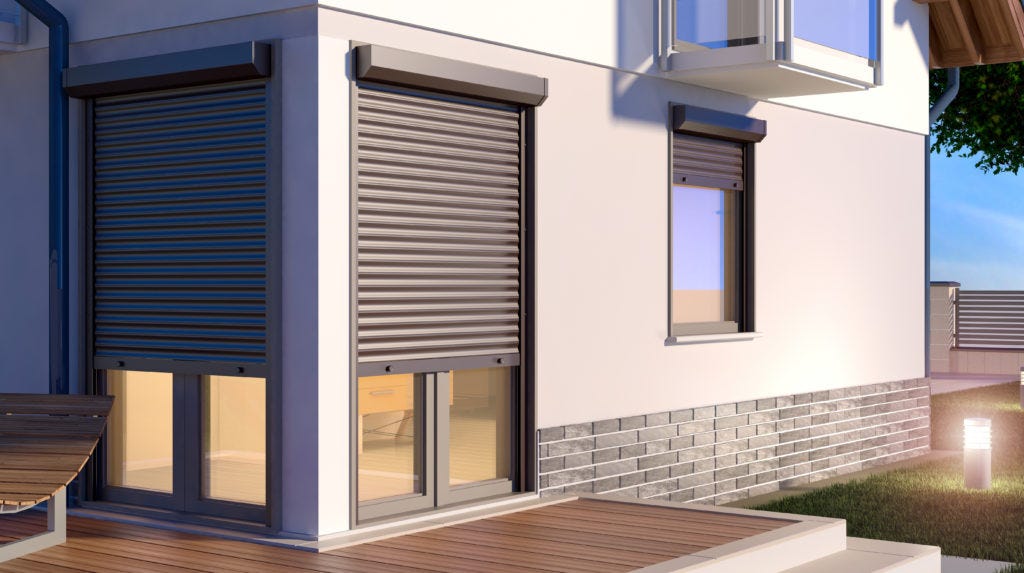
Stores, from rochehabitat.com
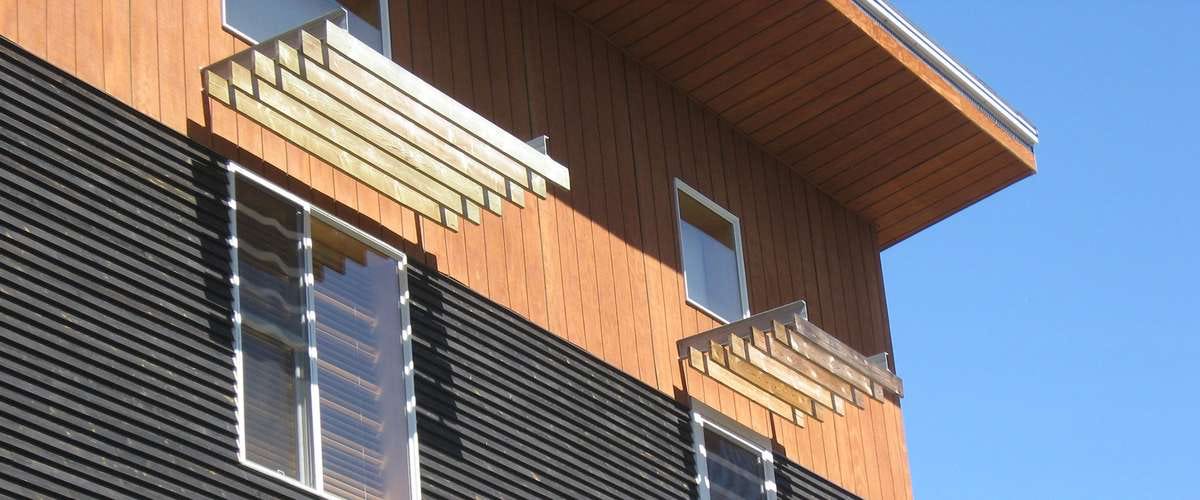
Brises soleils, from ecohabitation.com
(Apologies for the formatting—I’m away from my computer for the summer and so have to post from my iPad, which doesn’t seem to want to let me create photo captions.)
The city
I think school and home will be enough of a focus for me, but I’ll still toss out some suggestions to the city, in writing or in person, as I can. More cooling centers, more community pools or swimming areas in the Seine (in July and August, there are quite a few, which is great), repaving dark sidewalks with beige concrete, adding vegetation and letting the trees grow. We can do it. We have to do it.
Finally, the world
Ophélie Hocquard, a French comedian put it well: the problem is not that France doesn’t have air conditioning. The problem is climate change. Our planet is getting hotter. Europe is warming twice as fast as the global average, but every corner of the world, equator to poles, the Mariana Trench to the summit of Mount Everest, is changing and changing rapidly. Adaptation will only take us so far, so we need to cut emissions, and fast. Luckily, solar installations are rapidly expanding and electric vehicles are being more widely adopted. We need things to keep moving in the right direction, and I hope each of us will do whatever we can to push us closer to a livable future.
I don’t know if we will do it, but I have to hope.
How are you doing these days? Are you living through a heatwave? Enjoying a perfect summer? Or maybe you’re in the southern hemisphere (or Mongolia?) feeling cool and cozy.
*My girls are 11 and 13, but when they are suffering in the middle of the night, they’re my babies.
The website for the city of Meudon says the majority of schools are equipped with a large air conditioned space. I’ll be curious to learn more about this, and to find out how to get this feature implemented at my children’s schools. https://www.meudon.fr/actualite/canicule/
Yes, globally, we must make far greater efforts to tackle the changing climate. I love my electric car and will never go back. But of course, that is only one step. I’m glad you are now recovering in some cooler weather.
I’m glad you have a reprieve. Tonight’s meteo says the canicule hits again on Wednesday. As you said, the climate is going to continue to heat up. The problem is that those in charge refuse to comprise to find more ways to cut emissions.