The X-ray Files
How to know when you've mastered the French medical system

After an iffy night’s sleep, I was looking forward to reclining in a comfortable chair and doing nothing for two hours. If I had to have a root canal to justify some rest, so be it.
The dentist turned out to need more engagement from me than I had hoped for—turning my head to the right while his assistant yanked my cheek open to the left, swallowing swimming pools worth of water as he rinsed the drilling site—but I did still enjoy the two-plus hours with my eyes closed to let my mind wander (“Don’t look at the screen; that’s for me,” the surgeon counseled when he saw me gazing at the monitor that projected a magnified view of my mouth).
David Sedaris’s French dentist played the travel channel, where a family might barbeque skewered mice; mine relied on my having a rich inner life to turn to. Inner life is my forte, so I spent a good while conjuring the voice of a character I may build a book around, or who may have just been a dentistry distraction. My thoughts were only occasionally interrupted to ask me to please swallow more of the water, which I was letting run over my cheek, into my hair, and down my neck.
When a consulting dentist asked if I had any objections on religious grounds to products derived from animal products, I grunted out an “uh-uh,” for no, and then spent several minutes feeling proud of my ability to understand her question so easily—she was soft spoken and her voice competed with the suction tube hanging on my cheek, drilling, and classical music in the background.
An unexpected question like that would have thrown me a few years ago. In my second pregnancy, only one year into our lives in France, I often had to ask doctors to repeat themselves, and I could not for the life of me remember the word for “fasted,” even though I had fasting lab work once a month to check for toxoplasmosis. (Most French people have toxoplasmosis, thanks to their love of undercooked beef. Therefore, if you don’t have it, doctors assume you’re about to get it. While it’s okay if you have toxoplasmosis beforehand, it’s risky if you contract it during pregnancy. I always wished I could just sign a form promising to keep not eating raw meat, but no, every month I gave the phlebotomist the crook of my elbow, accepting the punishment for my aversion to steak tartare.)
By the time I had abdominal surgery a few years later to correct separation caused by that pregnancy, I was pretty comfortable with French and was better at sticking up for myself. When the nurses tried to send me home the day of the procedure despite a planned overnight stay, I managed to argue with them and eventually win—though not before I was dressed, downstairs, and sitting doubled over at a discharge desk refusing to write a check.
“Will you please call my doctor?” I asked. “I haven’t even seen her since the surgery. I don’t have any wound care instructions or prescriptions.” Finally, they called her and she rushed over and brought me back to bed. Turns out the hospital staff had confused me with her other patient from that day. The other woman had a nose job. You’d think they’d take one look at me, notice the lack of bandages on my face, and think, “probably not that one.” But this is the country of je ne sais quoi.
My most recent injury, a broken collarbone from a dumb move on the ski slopes, was child’s play. In the little mountain office, I chatted up the doctor, laughing and joking as though putting him in a good mood would make my X-ray prove I had nothing more than a bruise. “Ah, well, there is a tiny little fracture here,” the doctor said, apologetically. “C’est pas grave,” I told him. “This is the best fracture I’ve ever had. It’s so small. Hardly painful!” When the physical therapist in charge of my reeducation tried to make me do a cold plunge after I’d broken out in hives the previous time, I looked him in the eye and said, “I forgot my bathing suit.”
I wouldn’t call myself an expert on the French medical system, but all this experience has to count for something. Mostly I’ve learned I’m expected to take an active role in my own care.
For example, I bought the folder with all my paperwork with me to the dentist appointment—I didn’t know if it would be necessary, but a person is nothing in France without a big dossier for every aspect of their life. My instincts were right, my folder contained two documents that I needed to sign.
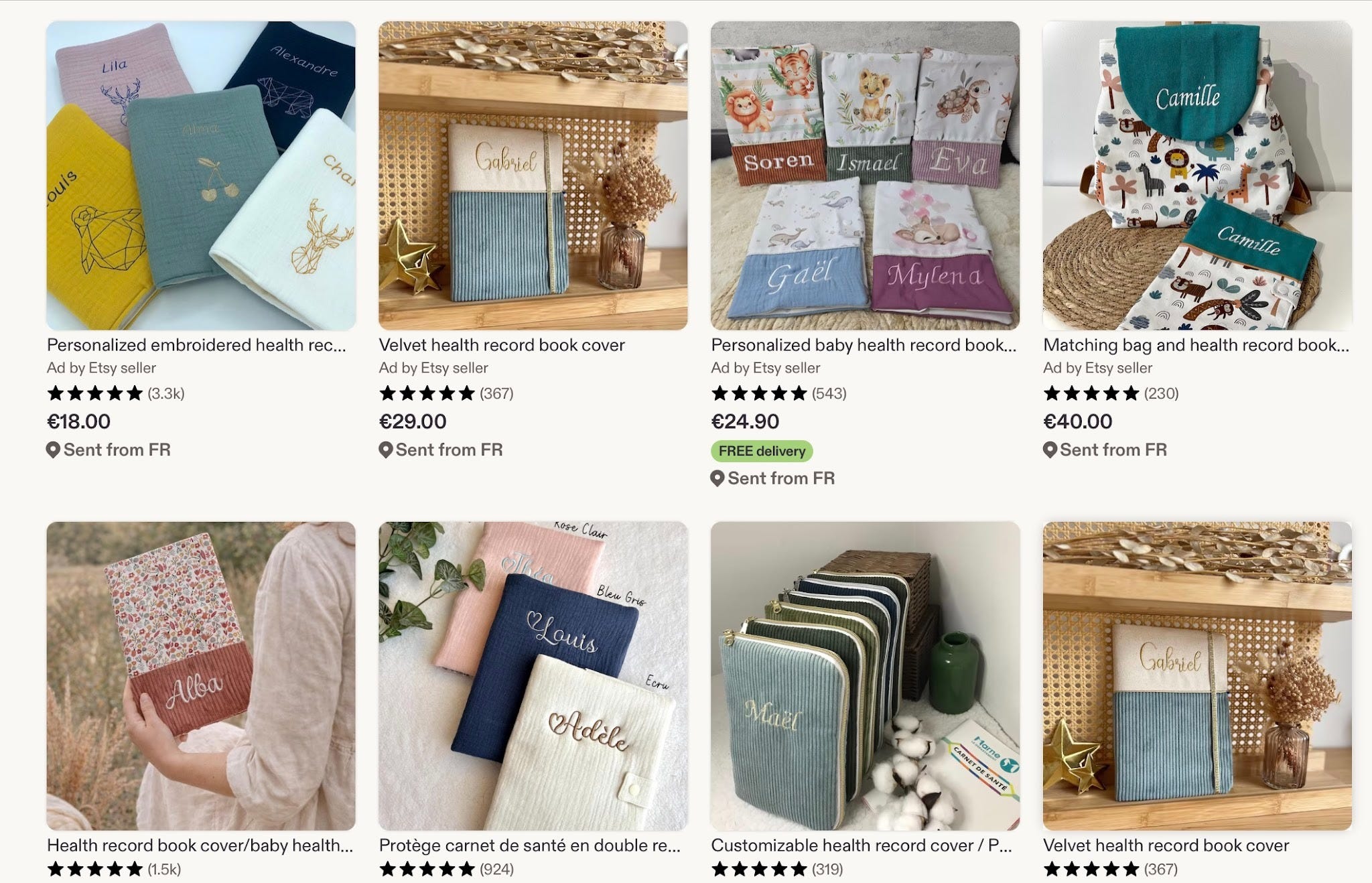
French folks are responsible for their own medical records. Before a baby leaves the hospital, they are issued a carnet de santé, a booklet religiously carried to every pediatric and dentist appointment from birth until age eighteen. The doctors note every visit, measurement, and vaccine. Parents can add their own observations. It becomes a kind of baby book, and people develop real attachments to them. Some parents buy decorative covers for their child’s carnet; there are more than 1,000 customizable options on French Etsy.
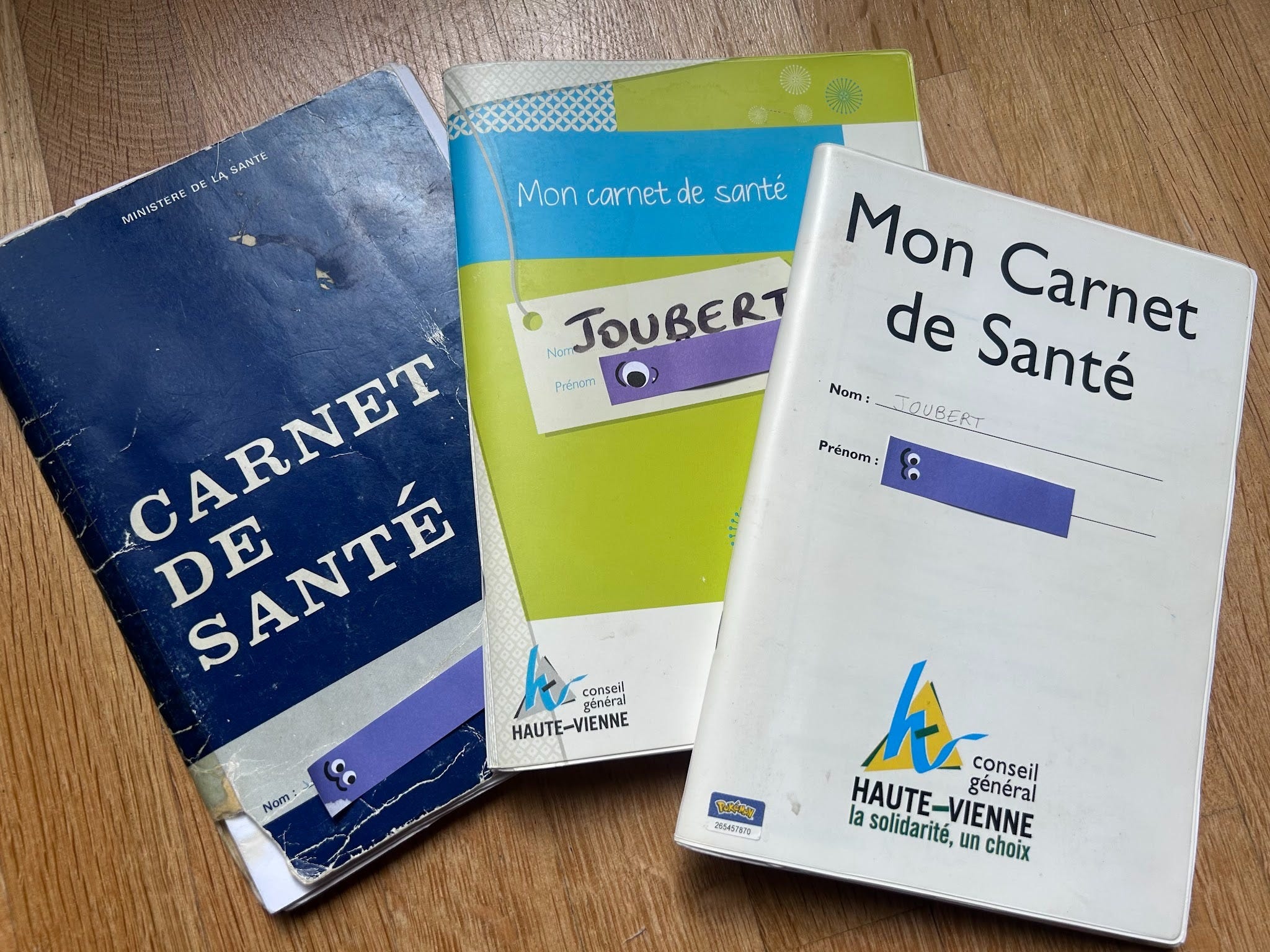
Not being born in France, I don’t have a carnet, but I do have a bulging file in our cabinet, stuffed with every scan, prescription, lab report, and X-ray I’ve ever had, which is a lot. When a neighbor was locked out recently, she asked if I had an X-ray she could use to unlock her door. “Boy, do I!” I said, flipping through them. “Which one should we use? My lungs? Clavicle? Teeth?” I chose lungs, because I had tons of X-rays when I had pneumonia so figured I could sacrifice one. Yet when we bent it in half, I suffered a wave of panic. Afterall, my husband still has the X-ray of the arm he broke when he was fifteen. We’re meant to guard our dossiers until death do us part.
Likewise, the patient, not the doctor, secures the relevant medical paraphernalia for their appointments.
Kid getting vaccines? You’re going to need to get those at the pharmacy and bring them to the doctor. Make sure you carry them with an ice pack or the receptionist will give you a Very Stern Look and you will have to swear on your life (or, I guess, on your kid’s likelihood of contracting measles) that you left home less than twenty minutes ago. Less than fifteen, probably! And then they will put them in the mini fridge next to their sandwich until your doctor asks for them.
Having major surgery? You’ll need to buy two baskets worth of stuff at the pharmacy, bring some but not all of it to the hospital, and then rub your own self down with Betadine before being sliced open. Shouldn’t a nurse be responsible for this, you ask? Look, who do you trust more with your own life, yourself, a “doctor” of marine biology who can’t reach her back, or an experienced medical professional?
In France, you will never be denied care because you don’t have insurance—everyone has insurance—but you’re going to be knocking at death’s door and then will be left to perish on the welcome mat if you forget to include, in your three-inch thick folder of medical records, that one piece of paper that tells the surgeon what procedure they are performing on you. You don’t want a facelift when you were supposed to have a triple bypass, do you?1
The paperwork must be studied, the instructions must be followed, the pharmacist must be consulted. No one is holding your hand through these things. This I know.
Have I had my share of medical failures in my adopted country? If you call bringing the wrong clothes for my newborn baby to the hospital, going to a scheduled Pap smear while on my period, or not honoring an appointment with a physical therapist because I had fainted at the receptionist’s desk and she’d booked the appointment while I was unconscious on the floor, then yes.
I call these learning experiences, and now, after thirteen years and counting, I can go to the dental surgeon, open my mouth wide, and confidently answer questions with a firm
“Hauljmghlkiyush.”
Santé !
Thanks being here. If you liked this letter, you can subscribe or share it with a friend using the buttons below.
I promised you a report on how many chocolate covered wasabi peas I ate on April Fool’s. Drumroll: One. It was as disgusting as you think it is.
If you missed that story, you can read it here:
Okay, I don’t actually know what would happen if you showed up for a surgery without your giant folder of paperwork…but I wouldn’t try it.
Wonderful piece, Elizabeth. You’ve sufficiently scared the hell out of me, a non resident, non citizen. Luckily, I’m mostly at the pharmacy level of medical need, and those people, bless them, are there for the asking/needing. Last year, I got bitten by a spider. I convinced myself it was a black widow, though I never saw it. I had two pierced bleeding holes in my hand so I want to the pharmacist, showed her my hand, and told her I thought it was a black widow spider—une veuve noire—which I had to look up, and she laughed me out of the shop, telling me there are no black widows there, in Brittany. Of course, I didn’t believe her and knew I was going to die, or at least lose my hand, but, of course, she was right, and it was nothing….
Thanks for the warning!